
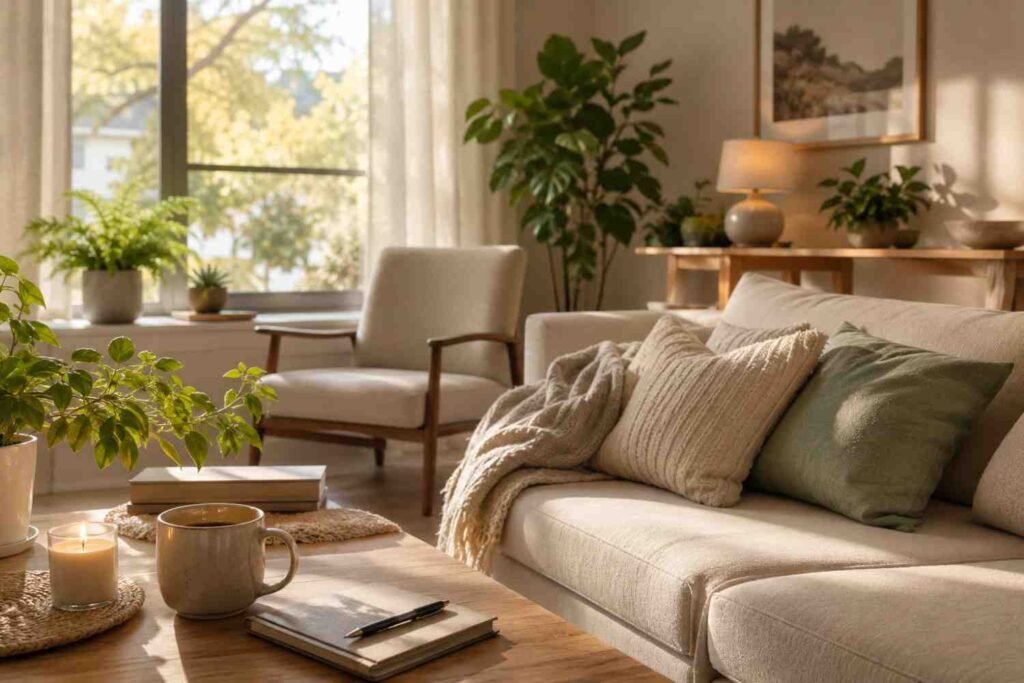
Home does not always feel restful anymore. Many people walk into their living spaces carrying noise from work, endless notifications, clutter, and mental exhaustion. Even a beautifully designed house can feel emotionally heavy when daily habits create constant overstimulation. That disconnect usually shows up quietly. Sleep feels lighter, focus disappears faster, and simple tasks begin to feel mentally draining.
What changed things for me was realizing that mindfulness at home has less to do with expensive décor and more to do with repeated behavior. A peaceful home environment often comes from tiny actions that happen every day without much thought. The way you enter a room, clean your kitchen, use lighting, or end your evening slowly shapes how your mind responds to your space. Small shifts create emotional stability over time.
Start The Morning With Visual Calm

The first few minutes of the day often influence the emotional tone of everything that follows. Walking into a messy kitchen or seeing piles of laundry immediately creates low-level stress, even when we do not consciously notice it. One of the simplest calming home habits is making the bed right after waking up. It creates instant order and gives your brain a sense of completion early in the morning.
Natural light also matters more than most people realize. Opening blinds immediately after waking up helps regulate circadian rhythm and supports morning alertness. Spaces that receive daylight tend to feel more open and emotionally lighter throughout the day.
Many people also benefit from creating quiet, device-free mornings. Something as simple as brewing coffee or tea without scrolling through a phone can completely change mental energy. Paying attention to sounds, warmth, and movement creates a grounding effect that supports mindful living at home.
Reduce Clutter Before It Builds Emotional Weight
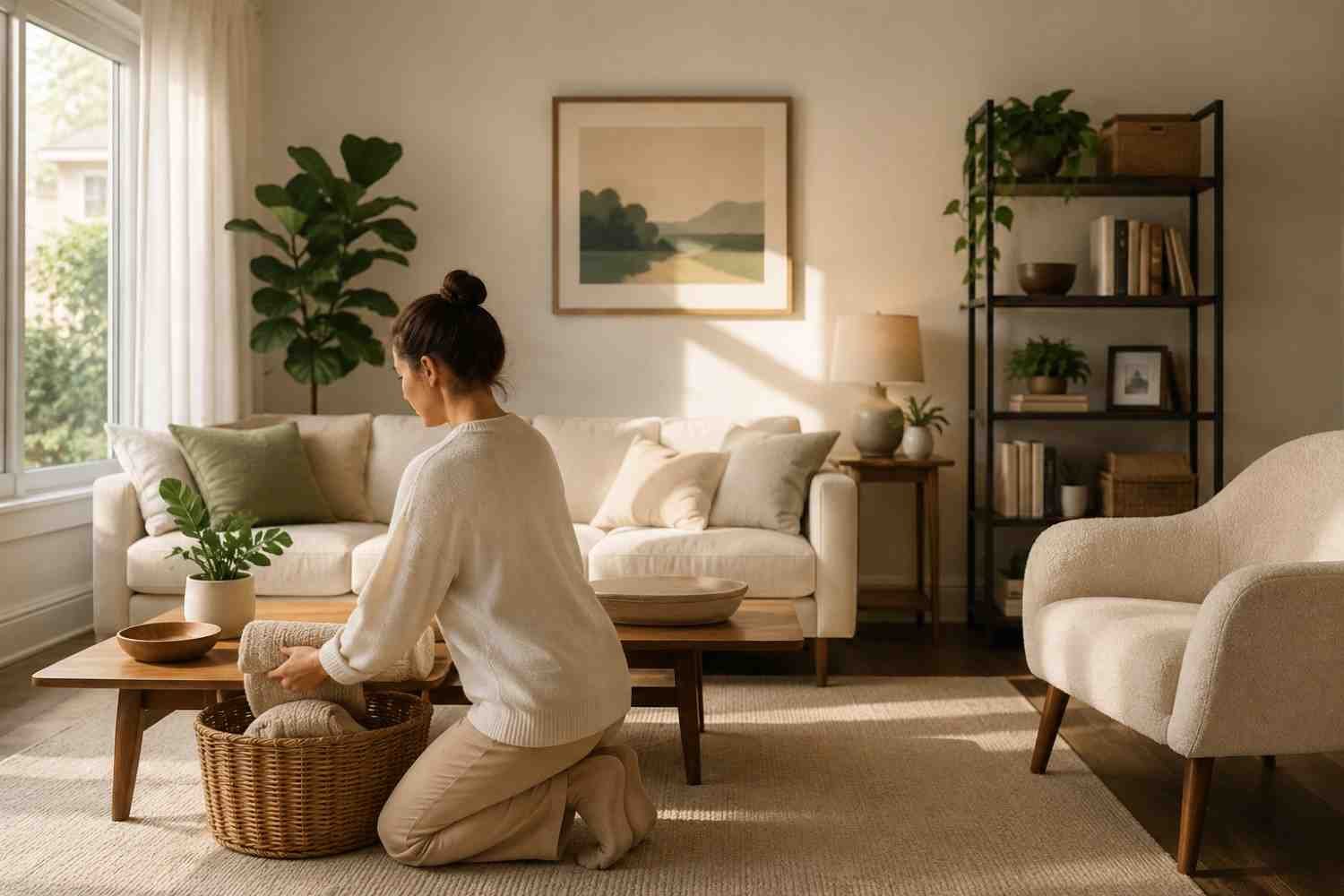
Clutter is not always about cleanliness. Often, it is about unfinished mental processing. Visual mess competes for attention, even in the background. That is why homes with constant clutter tend to feel mentally noisy.
One habit that works surprisingly well is the “one-touch” rule. Instead of placing something down temporarily, put it back immediately after use. Jackets go directly into closets. Dishes go straight into the dishwasher. Mail gets sorted instead of stacked. These tiny actions prevent overwhelming cleanup sessions later.
A short nightly reset also helps maintain a stress-free home setup without turning cleaning into a major chore. Spending ten minutes clearing counters, folding blankets, or organizing surfaces creates a calmer environment for the next morning.
Many people underestimate how much emotional comfort comes from consistency. That is why intentional daily routines often have a bigger impact on emotional wellness than occasional deep-cleaning weekends.
Use Sensory Details More Intentionally
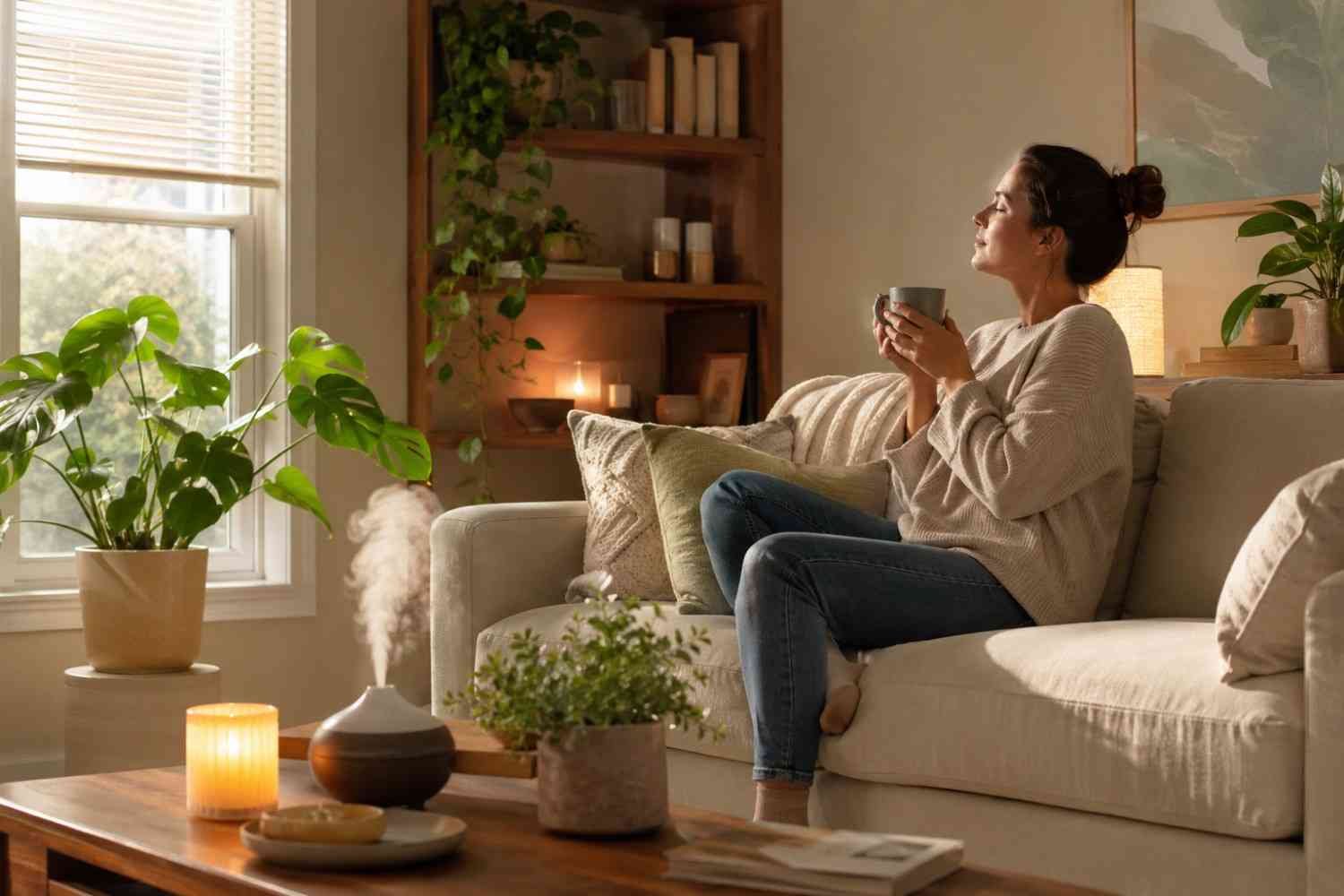
Most people focus only on what a home looks like. A mindful environment also depends on how it feels, smells, and sounds.
Harsh overhead lighting can make spaces feel overstimulating, especially in the evening. Softer lamps, warm-toned lighting, and candles create a more relaxing atmosphere after sunset. Even changing the lighting in one room can noticeably affect stress levels.
Scent also plays a role in emotional regulation. Natural aromatherapy using lavender, cedarwood, eucalyptus, or bergamot can make a space feel calmer without becoming overwhelming. Synthetic air fresheners often create sensory fatigue instead of comfort.
Here are a few sensory adjustments that genuinely help create cozy, mindful spaces:
- Warm lighting during evening hours
- Indoor plants near work or relaxation areas
- Essential oil diffusers with subtle natural scents
- Reduced background television noise
- Soft textures like cotton, linen, or wool
These changes sound small, but together they create sensory comfort that supports a healthier home environment.
Build Small Transition Rituals Between Outside Stress And Home

One overlooked part of mindful living is how we transition into our homes after stressful days. Many people physically enter the house while mentally remaining stuck in work mode.
Simple transitional practices help create emotional separation.
Removing shoes near the entrance creates both physical cleanliness and a psychological shift into comfort mode. Some people also pause for a few deep breaths before entering. It sounds basic, but intentional pauses help the nervous system slow down.
Mindful dishwashing can even become part of this process. Instead of rushing through chores while multitasking, paying attention to movement, water temperature, and repetition creates moments of active mental stillness. Many people accidentally turn everyday maintenance into a form of meditation without realizing it.
Mindfulness At Home Is About Consistency, Not Perfection
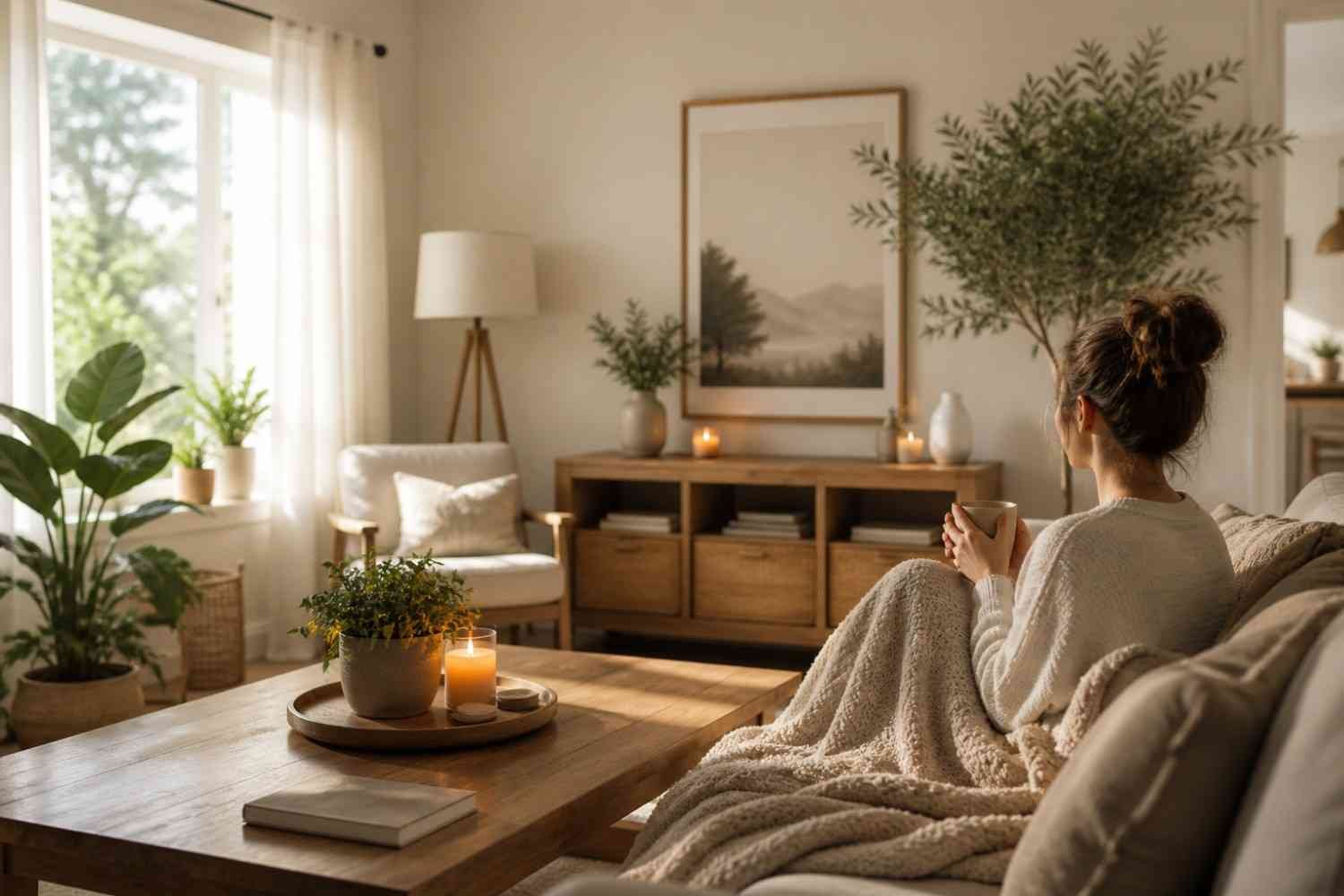
One mistake people make is believing mindful homes need to look perfectly organized all the time. Real life does not work that way. Homes are lived in. There will always be laundry, unfinished tasks, noise, and occasional mess.
That usually happens through small repeatable habits:
- Opening windows in the morning
- Resetting shared spaces at night
- Creating quiet screen-free moments
- Using calming routines consistently
- Reducing unnecessary visual clutter
A peaceful home environment grows slowly. Most people notice the emotional shift before they notice the visual one. They feel calmer entering rooms. Their sleep improves, and focus lasts longer. Their home begins to feel restorative instead of draining.
FAQs: How To Create a Mindful Home Environment Using Simple Everyday Habits
1. What Is The First Step In Creating A Mindful Home Environment?
The easiest starting point is reducing visible clutter in one frequently used area. A calmer visual environment immediately lowers mental overstimulation and creates a sense of control.
2. How Do Daily Habits Affect A Home Environment?
Daily habits shape the emotional energy of a space over time. Small actions like cleaning surfaces, limiting screen use, and maintaining calming routines influence stress levels and focus.
3. Can A Small Apartment Still Feel Mindful And Peaceful?
Yes. Mindfulness depends more on routines, lighting, sensory comfort, and organization than on square footage. Even small spaces can feel calm and emotionally supportive.
4. Why Are Screen-Free Spaces Important At Home?
Constant device exposure keeps the brain mentally stimulated. Screen-free spaces encourage rest, improve sleep quality, and create better emotional separation from work and online stress.
Wrapping Things Up
Creating a mindful home environment rarely happens through dramatic changes. Most of the transformation comes from repetition. Small habits begin shaping how a space feels emotionally, not just visually. Over time, routines that once felt insignificant start creating mental clarity, calmer mornings, and quieter evenings. The home slowly becomes a place where the nervous system can actually rest.
The most sustainable changes are usually the simplest ones. A calmer home does not require perfection. It requires attention, consistency, and habits that genuinely support the way you want to feel every day.