

A lot of people approach personal growth like a dramatic transformation project. They wait for a new year, a breakdown, a life-changing book, or some huge burst of motivation before deciding to change. The problem is that real growth rarely arrives that way. Most meaningful changes happen quietly through small daily choices that almost seem too simple to matter at first.
That realization changed the way I started thinking about mindfulness and self-improvement. Instead of constantly trying to “fix” myself, I began paying attention to the smaller habits shaping my emotional state every day. The way I moved between tasks, how often I checked my phone, the tone of my thoughts in stressful moments, even how I breathed during overwhelming situations, started affecting my mental clarity more than any motivational content ever did.
Mindful Personal Growth Feels Different From Constant Self-Improvement

Modern self-improvement culture often feels exhausting. There is always pressure to optimize more, achieve faster, wake up earlier, or completely reinvent yourself every few months. After a while, personal growth starts feeling more like performance than genuine self-awareness.
Mindful personal growth works differently because it focuses more on awareness than perfection.
Instead of asking:
- “How can I become a completely different person?”
The mindset slowly shifts toward: - “How can I become more present and intentional in the life I already have?”
That change sounds small, but it affects everything. Growth becomes calmer, more sustainable, and less emotionally draining.
This is also why many people naturally drift toward a mindful spiritual journey over time. Once growth becomes less focused on productivity and more connected to awareness, people often begin paying closer attention to emotional balance, inner peace, and daily presence.
Tiny Habits Often Create the Biggest Emotional Changes
One thing mindfulness teaches quickly is that small habits compound emotionally. Tiny actions repeated consistently often shape mental wellness more than occasional dramatic efforts.
Morning gratitude is one example. Writing down three things you appreciate may sound simple, but research around gratitude practice and positive psychology continues to show how it gradually shifts attention away from constant stress and negativity.
The same thing happens with small moments of intentional pause.
Many people rush between meetings, tasks, notifications, and conversations without allowing their nervous system time to reset. Even a brief six-second pause between activities can help create more emotional regulation throughout the day.
Some small mindful habits that quietly improve emotional clarity include:
- short gratitude journaling
- mindful breathing
- slower transitions between tasks
- limiting overstimulation before bed
- noticing emotional reactions without immediately judging them
These shifts rarely feel dramatic in the beginning, but over time, they change how people respond to stress, pressure, and daily overwhelm.
The 5-Minute Rule Helps Reduce Mental Resistance
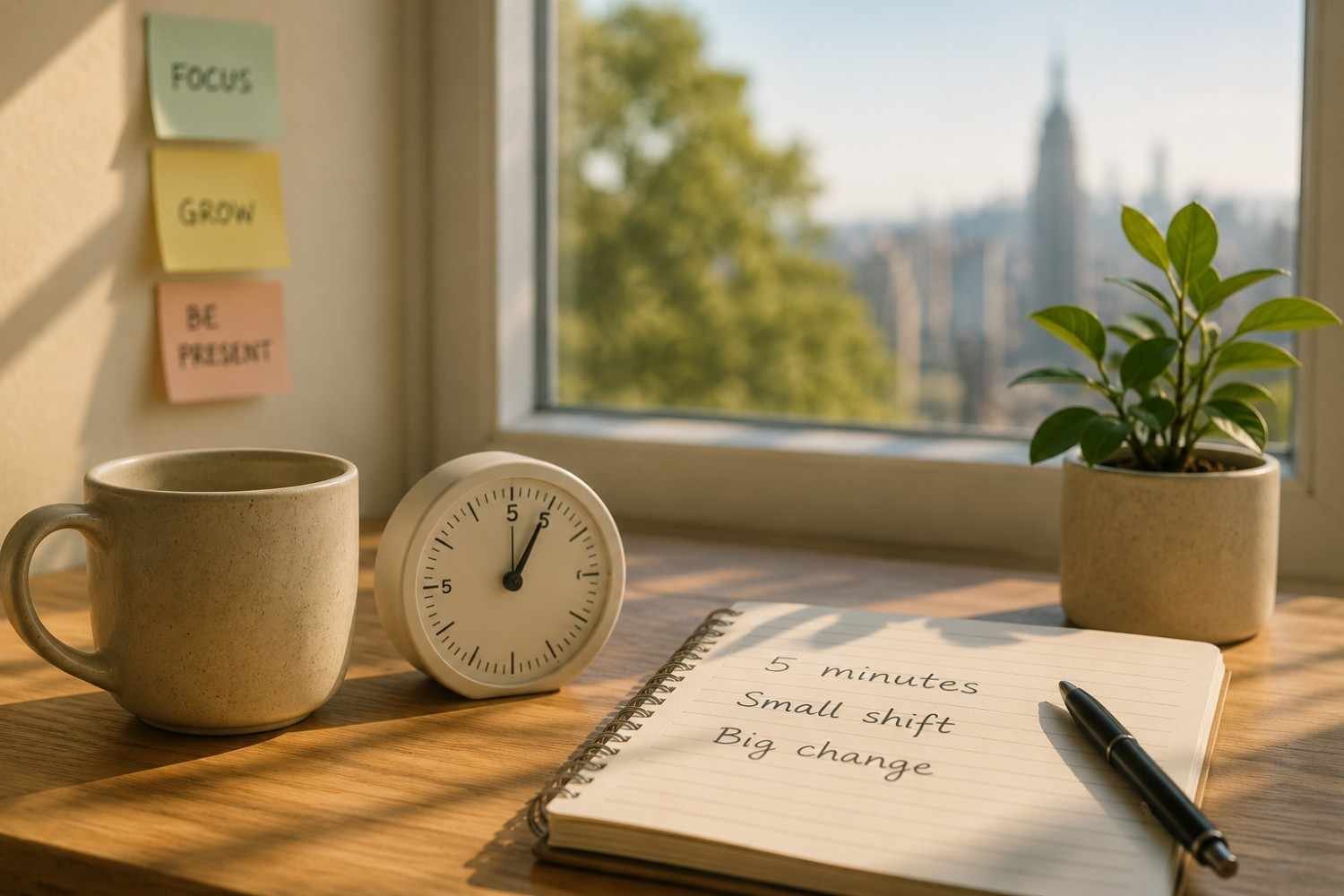
One of the most practical mindset shifts for mindful growth is the 5-minute rule.
A lot of emotional stress comes from avoidance. Tasks grow larger in our minds the longer we delay them. Whether it is exercise, reading, cleaning, or difficult conversations, procrastination usually creates more anxiety than the actual activity itself.
The 5-minute rule works because it lowers mental resistance. Instead of forcing yourself to complete an entire task, you simply commit to starting for five minutes.
That small beginning often breaks the emotional weight surrounding the task.
This approach also builds self-trust slowly. Instead of relying on sudden motivation, you create momentum through consistency. That tends to support emotional resilience much better long-term.
Intentional Breathing Changes More Than People Realize
Breathing patterns affect the nervous system more directly than many people realize. Stress often shortens breathing automatically, which keeps the body in a heightened state of tension.
Techniques like 4-7-8 breathing can help interrupt that cycle:
- Inhale for 4 seconds
- hold for 7 seconds
- exhale for 8 seconds
This type of intentional breathing supports relaxation by slowing physical stress responses.
Many wellness and mental health organizations now discuss breathing exercises because they help regulate emotional intensity in real time without requiring complicated routines or expensive tools.
The biggest benefit is accessibility. Mindful breathing can happen:
- during stressful workdays
- before difficult conversations
- while commuting
- after emotional overwhelm
- before sleep
That simplicity is part of what makes it effective.
Digital Overstimulation Quietly Impacts Emotional Health

One thing many people underestimate is how heavily digital overstimulation affects mindfulness and emotional balance.
Constant notifications, endless scrolling, bright screens, and nonstop information overload make it harder for the brain to settle into stillness. Even moments of rest often become filled with stimulation.
Digital decluttering does not necessarily mean abandoning technology completely. It usually means becoming more intentional with it.
Simple changes can improve mental clarity significantly:
- dimming lights before bed
- putting devices away earlier at night
- limiting background noise
- Reducing unnecessary notifications
- spending short periods without constant input
Sleep quality also tends to improve when overstimulation decreases, which naturally affects mood, focus, and emotional resilience during the day.
Growth Becomes Easier When You Stop Waiting for Perfection
A surprising amount of personal stagnation comes from perfectionism.
People delay growth because they believe they need ideal conditions before starting:
- more confidence
- more time
- more clarity
- less fear
- perfect consistency
But mindful growth usually happens while life still feels imperfect.
Small, uncomfortable actions often matter more than perfect plans. Speaking up during a meeting, trying a new skill, setting a boundary, or starting before you feel fully ready all slowly expand emotional confidence.
Celebrating small wins matters too. Many people overlook progress because they only recognize major milestones. But confidence often builds through repeated evidence that you are capable of showing up consistently.
FAQs: The Small Daily Shifts That Lead to Mindful Personal Growth
1. What is mindful personal growth?
Mindful personal growth focuses on becoming more self-aware, emotionally balanced, and intentional through small daily habits and reflective thinking rather than extreme self-improvement pressure.
2. How can mindfulness improve personal development?
Mindfulness improves personal development by increasing emotional awareness, reducing stress reactivity, improving focus, and helping people make more intentional decisions daily.
3. What are simple mindful habits for beginners?
Simple mindful habits include gratitude journaling, intentional breathing, mindful pauses between tasks, reducing digital overstimulation, and short daily self-reflection practices.
4. Why do small habits matter in personal growth?
Small habits matter because repeated daily behaviors gradually shape emotional resilience, mindset, stress management, and overall mental wellness over time.
The Quiet Changes Usually End Up Lasting the Longest
Mindful personal growth rarely looks dramatic from the outside. Most of the important shifts happen internally through quieter moments of awareness, honesty, and consistency. Small habits may seem insignificant individually, but over time they shape the way people respond to stress, relationships, setbacks, and everyday life itself.
That’s why sustainable growth often feels slower but more genuine. Instead of constantly chasing a better version of yourself, mindfulness gradually teaches you how to become more connected to the person you already are.